
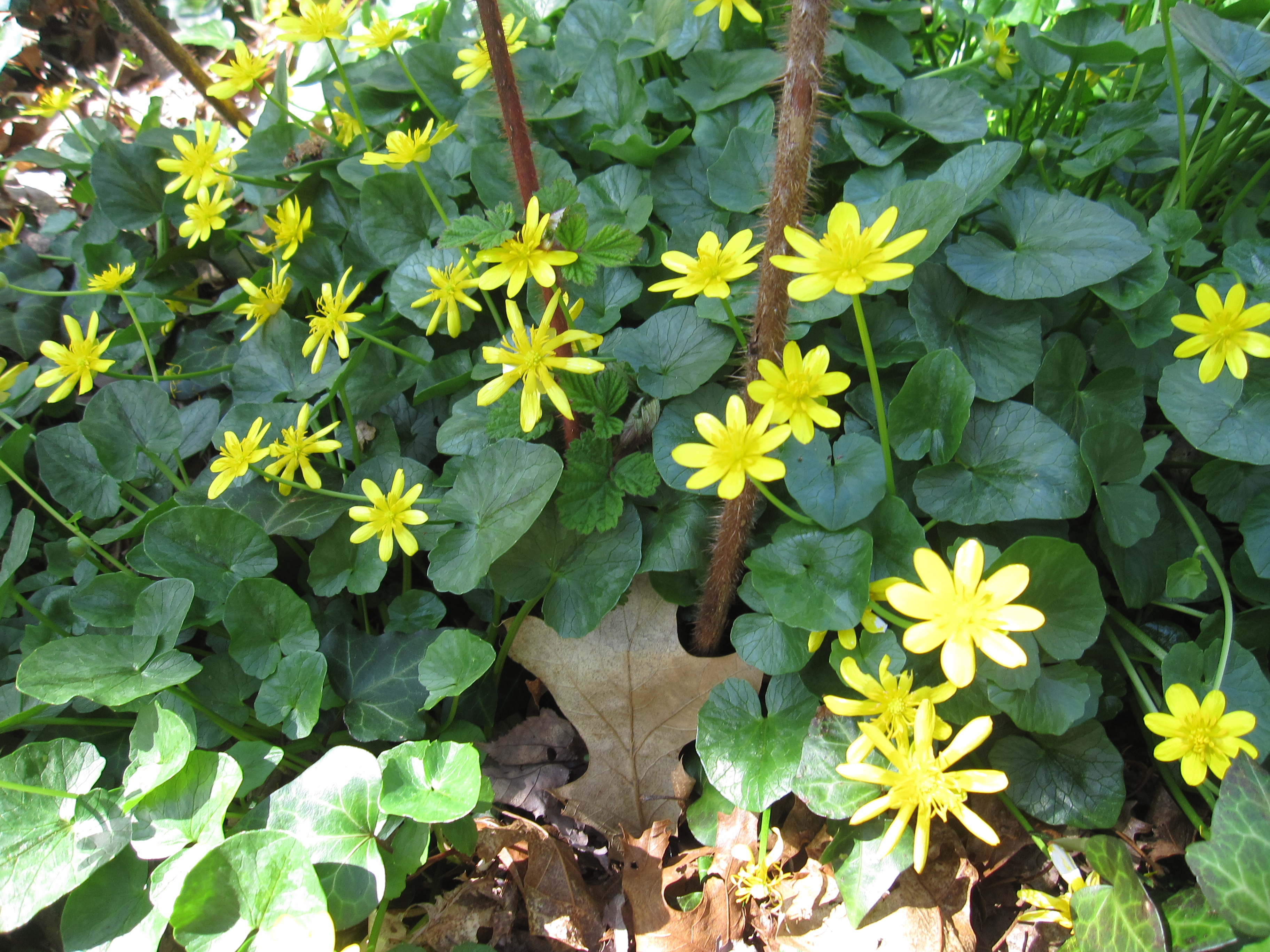
Lesser Celandine or Fig Buttercup It’s the last day of April, and beautiful 9-petal bright yellow buttercup flowers cover lawns, hill sides, stream banks, bogs, and anyplace ground cover can grow. Uprooting one of the multi-stem plants reveals the cluster of tubers that identify it as fig buttercup, also known as lesser celandine — a native European invasive to Long Island.
As with many of our invasives, this plant is edible. The tubers, pulled before and after the flowers bloom, can be boiled, roasted, and hot pickled. As with harvesting young invasive garlic mustard leaves, don’t be concerned about exhausting the supply.

To slow the rapid growth of fig buttercup, start removing the plants as soon as they are identified. Hand-pull plants before they set seeding structures. The stems of the heart-shaped, wavy-edged leaves, which may be solid green or with deep plum blotches, can be easily grabbed at the ground, and gently yet firmly wiggled and slowly pulled to uproot the tubers. If the ground is compact, use a hand weeder garden tool. Then cook the tubers, following a recipe.

Garlic Mustard The young sprouts of the first year’s growth remain relatively small throughout the growing season and don’t flower. In late April/early May of the second year, the plant matures with small clusters of white flowers at the top of each stalk. Uproot and leave the small first year’s seedlings and rosettes on site to dry. Uproot and solarize all other stages, beginning with the flowering stage of this plant to prevent seedpods from developing and dispersing their seeds.
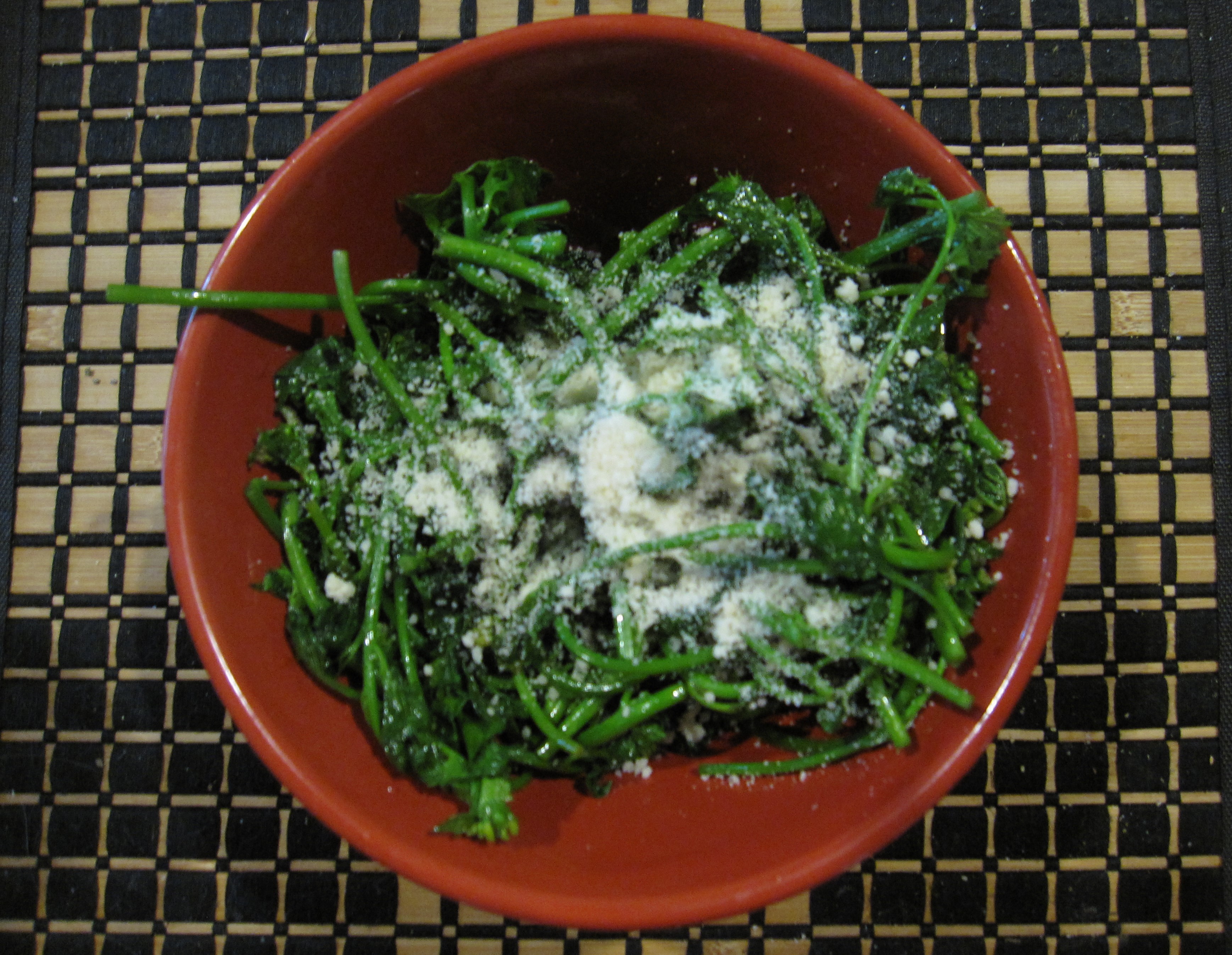
These flowering stems will continue to grow and produce seedpods — even if the entire plant is uprooted and composted or left on the ground. But first, because garlic mustard is edible, you may want to pinch off and cook the first year’s rosettes, or the tender stems several inches below the young flowers in the plant’s second year. Then uproot, solarize, and dispose of the rest.
Collect a bag of the flowering stems with the tender leaves and even the seedpods for a delightfully pungent green vegetable side dish. Saute and prepare, as for broccoli rabe. For a sweeter flavor, add orange or mango juice, cover, and steam for a minute. Garlic mustard also makes a tasty pesto.
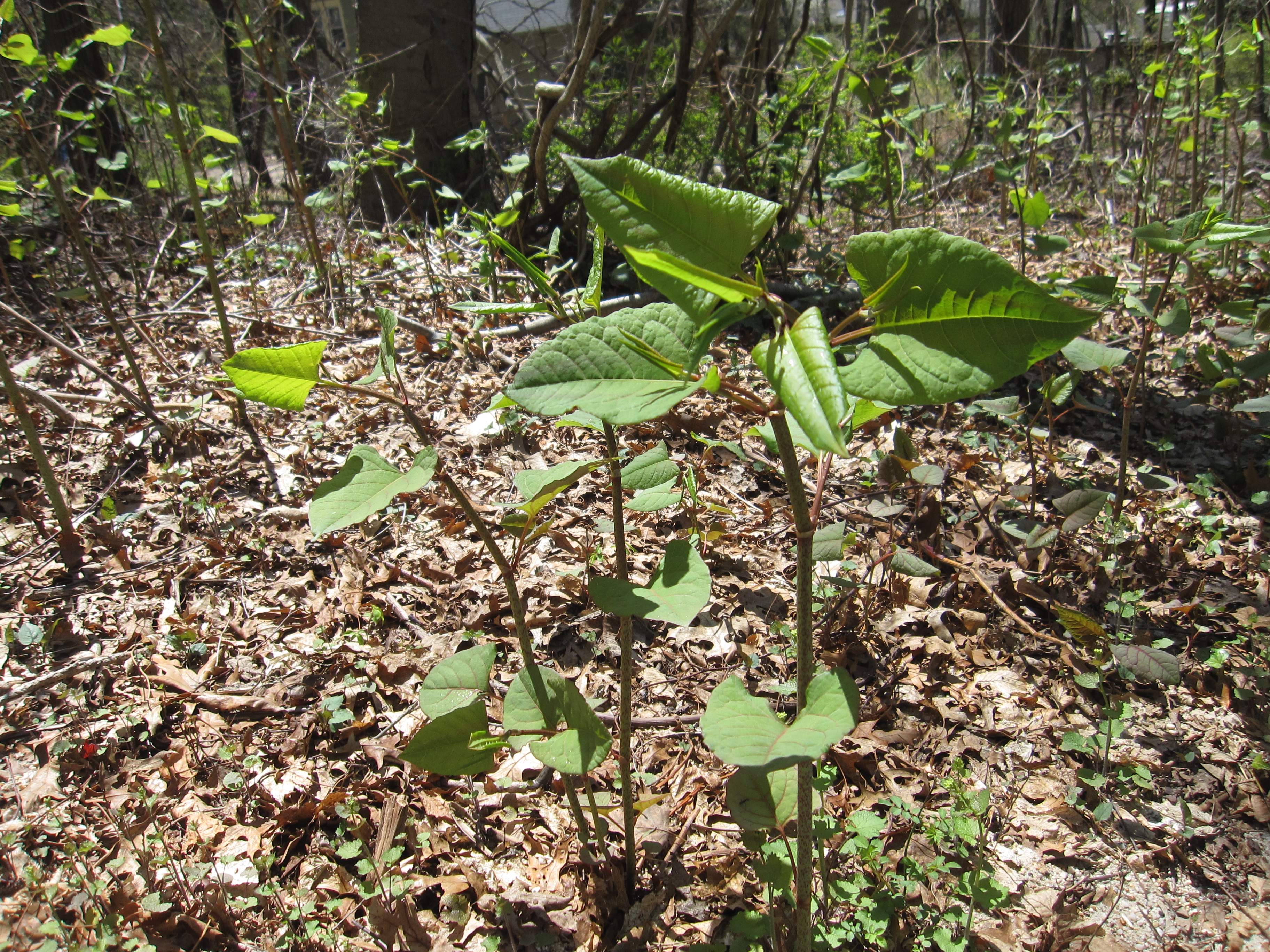
Japanese Knotweed This shrub-like plant can grow to over 10 feet tall. The stems are smooth, stout, and swollen at joints where the six -inch leaves meet the stem. Leaves are oval to somewhat triangular and pointed at the tip. In mid-summer, small white sprays of flowers are followed by small winged seeds.
Japanese knotweed seedlings are edible. According to Wildman Steve Brill, “You can eat Japanese knotweed shoots from mid-April to early May, before the plant gets tough and woody.”
Juvenile plants can be hand-pulled and should be done routinely throughout the growing season. Use a pulaski axe to remove the larger plants, including all roots and rhizomes. The roots make a pleasant and healthy tea and are known to help cure Lyme’s disease. Any portions of the root system not removed will potentially re-sprout. All plant parts and seeds should be bagged, solarized, and disposed of to prevent them from reestablishing.
Click here for more information about uprooting herbaceous plants.